
Grand National Betting: Odds, Tips and Strategy for Aintree
 Available in US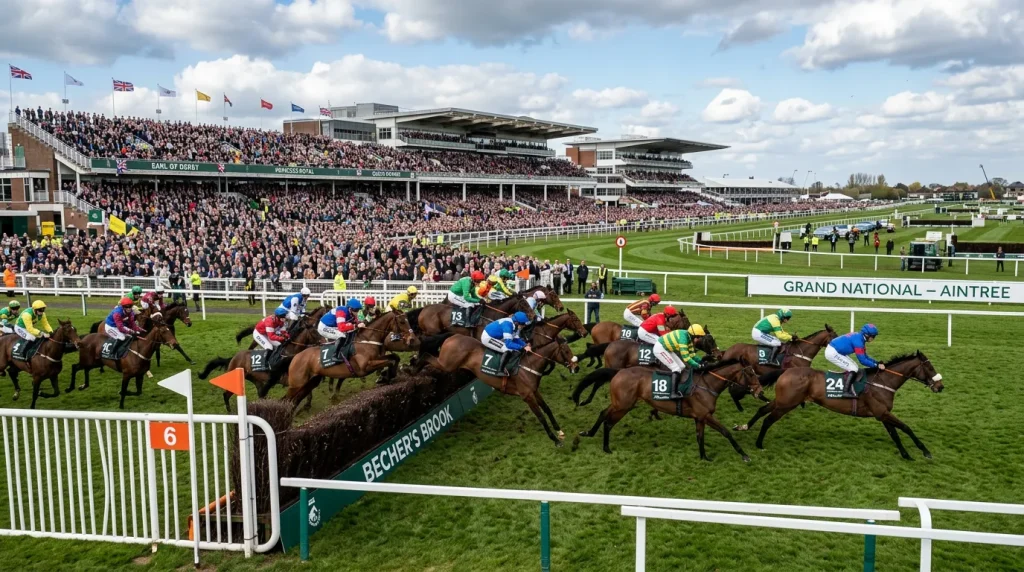
The numbers reflect the race’s unique position in British culture. The 2026 Grand National generated over £250 million in turnover across the three-day Aintree Festival, with the majority concentrated on the main event itself. To put that in perspective, 700% more bets were placed on the Grand National than the Gold Cup that same year—despite the Gold Cup being jump racing’s championship race.
This guide serves both the once-a-year punter picking names from the list and the serious analyst seeking structural edges in the world’s most famous handicap chase.
Grand National Betting — More on this topic at horse racing betting odds.
What Makes the Grand National Unique
The Grand National runs over approximately four miles and two furlongs, featuring 30 fences including the famous Becher’s Brook, The Chair, and Canal Turn. No other race in the calendar combines this distance with these obstacles. Horses that excel over three miles may lack the stamina; horses that stay four miles may lack the speed. Finding horses suited to Aintree’s specific demands is the fundamental challenge.
Field size reaches 40 runners—the maximum permitted. This creates traffic problems that standard form ignores. Horses can be hampered, brought down, or impeded regardless of their own ability. The random element introduced by a 40-horse field over demanding fences means even strongly-fancied horses face elevated risk of non-completion.
The handicap structure compresses the field. Weights range from over 11 stone at the top to around 10 stone at the bottom, ensuring no horse carries an insurmountable burden. Well-handicapped horses—those whose current ability exceeds the rating that determines their weight—can outperform market assessment.
Completion rates vary substantially by horse profile. Age, weight carried, jumping record, and previous Aintree experience all correlate with likelihood of finishing. Backing horses unlikely to complete the course—regardless of their theoretical ability—wastes stakes. Identifying runners who will see out the distance and negotiate the fences filters the field before assessing winning chances.
The ground can shift dramatically during the three-day meeting. Early-week weather affects Saturday’s surface; horses entered based on anticipated conditions may face different going. Flexibility—adjusting selections based on actual rather than anticipated conditions—improves outcomes.
Key Betting Factors
Weight carried influences outcomes more than typical handicaps. The extreme distance amplifies the burden; horses near the top of the weights face genuine disadvantages. Historical analysis shows horses carrying over 11 stone 6 pounds win less frequently than their form suggests. Weight limits don’t preclude success—several recent winners carried significant burdens—but statistical disadvantage exists.
Previous course form provides genuine guidance. Horses who’ve completed the National course before—whether in the main race or the Topham Chase over smaller fences—have demonstrated ability to handle Aintree’s specific demands. Course winners merit respect; course beginners carry uncertainty.
Stamina becomes paramount. Horses need to sustain effort over four miles and more when the final fence looms. Proven stamina over marathon distances—Scottish Grand National, Welsh Grand National, or other four-mile chases—indicates the necessary reserve. Horses whose form is exclusively at shorter distances represent speculative backing.
Jumping ability must be genuine rather than assumed. The National fences, though modified for safety in recent years, remain demanding. Horses who’ve made significant errors in their recent races carry heightened risk over 30 Aintree obstacles. Clean jumping records suggest reliability; sloppy jumpers may not complete.
Age profile follows historical patterns. Winners typically fall between 8 and 11 years old—experienced enough to handle the challenge, young enough to retain the necessary physical capacity. Very young horses lack experience; older horses may lack energy. Backing horses outside the optimal age range reduces probability of success.
Trainer records at Aintree concentrate among a handful of yards. Certain trainers repeatedly place horses in National contention; their preparation methods suit the race’s specific demands. Backing runners from trainers with established Aintree records improves baseline probability.
Grand National Betting Options
Win betting offers the straightforward option: back your selection to finish first. Given the race’s unpredictability, win-only stakes should reflect the elevated risk. Small stakes on longshots suit recreational punters seeking excitement; serious stakes require serious conviction.
Each-way betting suits the Grand National better than most races. Large fields mean places pay to fourth, fifth, or sixth depending on bookmaker—typically fifth or sixth. Backing a horse each-way captures value when genuine contenders finish close without winning. The place portion provides insurance; the win portion offers full upside.
Place-only betting removes win ambition entirely. You’re betting your horse will finish in the places, regardless of winning. For horses you rate highly to complete the course and finish prominently but consider unlikely winners, place-only betting concentrates stakes where probability is strongest.
Without the favourite markets remove the market leader from consideration. If you believe a prominent horse is overbet but aren’t certain who will beat it, betting the without-favourite market lets you oppose the market choice without identifying a specific alternative. This suits scenarios where favourite weakness seems clear but the field is otherwise open.
Tote pools offer genuine Grand National value. The race generates enormous pool sizes, and outsider dividends can dramatically exceed bookmaker SP. Placepot participation—finding placed horses in each of the first six races of the card—creates significant dividend potential when the National produces unexpected placed finishers. Grand National day sees Tote pools at their most liquid; the value opportunity is real.
Historical Trends Worth Noting
Weight ranges of winners cluster in particular zones. Analysis of recent decades shows winners concentrated between 10 stone 7 pounds and 11 stone 4 pounds. The extremes—lightest and heaviest weights—produce fewer winners than their proportion of runners suggests. This doesn’t mean heavily weighted horses can’t win, but probability tilts against them.
Age patterns show 8 to 10-year-olds performing best. This range combines experience with physical capability. Seven-year-olds occasionally win, but their inexperience over the unique obstacles creates elevated risk. Horses 12 and older complete the course less frequently; the stamina demands take accumulated toll.
Trainer concentration rewards attention. A relatively small number of yards produce a disproportionate share of National placed horses. These trainers understand Aintree preparation; their runners merit respect beyond their official ratings. Checking trainer records at the track filters the field toward higher-probability selections.
Irish-trained horses have increasingly dominated National Hunt racing, and the Grand National reflects this shift. Irish raiders now win regularly, their preparation often targeting Aintree specifically after Cheltenham Festival efforts. Respecting Irish form rather than dismissing it as foreign aligns with contemporary reality.
Trends provide context, not certainties. Every trend has exceptions; the Grand National produces surprises by its nature. Using historical patterns to filter initial candidates—then applying race-day judgment to specific circumstances—combines structural edge with tactical flexibility.
For guidance on the Tote betting options that offer genuine value on National day, see our comprehensive Tote betting guide. And for approaches to other big-field handicaps throughout the racing calendar, our guide to handicap betting covers the general principles.
See also Royal Ascot Odds Guide.
