
Going and Ground Conditions: How They Affect Racing Odds
 Available in US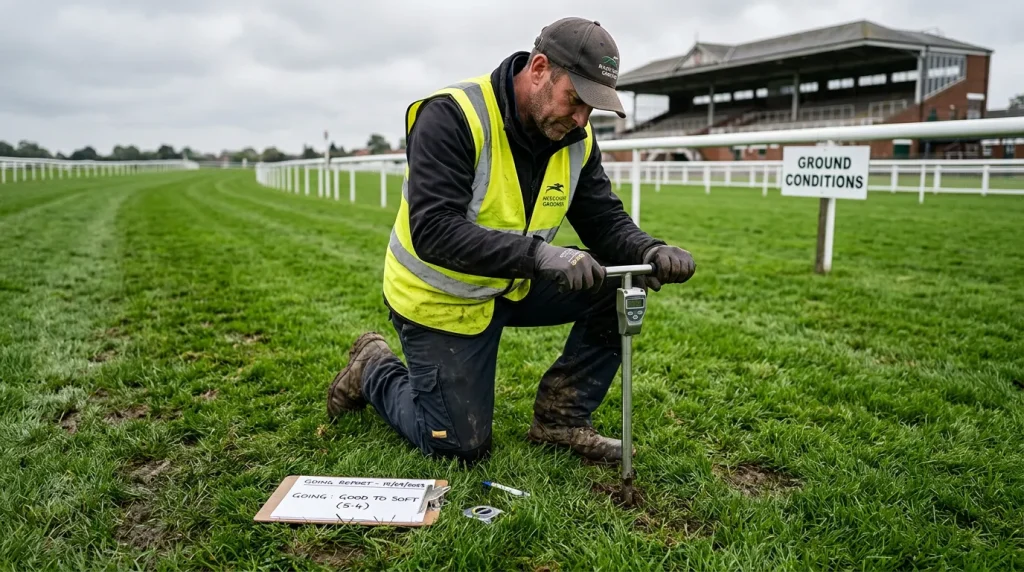
Ground preference exists because horses are built differently. Conformation, action, and physical attributes suit different surfaces. A horse with a low, daisy-cutting action struggles to lift its feet through heavy going; a horse with a high knee action wastes energy on fast ground but handles soft conditions efficiently. These physical realities create genuine performance variation that form analysis must capture.
This guide explains the going scale, methods for identifying ground preferences, how conditions affect betting markets, and why some courses consistently ride differently than the official going suggests.
Going and Ground Conditions — More on this topic at horse racing betting odds.
Understanding the Going Scale
British racecourses report going on a standardised scale from firm to heavy. Understanding what each term means—and recognising the substantial variation within categories—provides the foundation for ground-based analysis.
Hard ground rarely occurs; it’s essentially concrete, dangerous, and meetings would be abandoned before it’s officially described. When you see “firm” reported, the ground is already faster than average.
Firm describes fast ground with minimal give. The surface is quick, favouring horses with speed and efficient, economical actions. Jarring can concern horses with physical issues. Summer turf on well-drained courses produces firm going.
Good to Firm represents ideal conditions for most flat racing: fast enough to reward speed, sufficient cushion to protect limbs. Most trainers consider this optimal for turf racing. It’s the target most courses aim for during summer months.
Good indicates a balanced surface—neither fast nor testing. Good ground suits a wide range of horses; it doesn’t create the extreme advantage that firmer or softer conditions offer to specialists. Many horses run close to their ability on good ground regardless of preference.
Good to Soft introduces genuine give into the surface. Horses need to lift their feet more; those with ground actions find it comfortable while others begin to struggle. This marks the transition where ground preference starts significantly affecting outcomes.
Soft ground tests stamina and action properly. Horses not suited to the surface lose lengths per furlong; specialists come into their own. Winter National Hunt racing typically occurs on soft or heavy going. The difference between horses suited and unsuited to soft ground can exceed several lengths over a typical distance.
Heavy going presents extreme conditions. Only genuine mudlarks handle it well; speed horses flounder entirely. Races become stamina tests regardless of official distance. Meetings sometimes proceed on heavy ground when fixture congestion prevents postponement, but the racing is attritional.
The going stick provides objective measurement. This penetrometer measures ground resistance at multiple points; readings are converted to going descriptions. However, variation exists across the track—rails might ride firmer than outside, or sections might drain differently. Official going describes an average that individual patches may exceed or fall short of.
Identifying Ground Preference
Form analysis reveals ground preference through performance patterns. A horse that wins on soft ground then finishes mid-division on good to firm has demonstrated preference. The pattern matters more than single runs; consistent performance variation across ground conditions establishes genuine preference.
Reading form requires noting going alongside results. Most form databases display ground for each run; systematic attention to this information builds a preference profile. Horses whose best performances cluster on similar ground have identifiable preferences. Those whose form shows no ground correlation might genuinely handle all conditions—or might not have been tested across the range.
Breeding offers indicative guidance before race evidence accumulates. Some sires stamp their progeny with ground preferences: certain stallions’ offspring consistently handle soft ground while others produce firm-ground specialists. Damsire influence adds another layer. Breeding doesn’t determine preference absolutely, but it provides prior expectations that race performance confirms or revises.
Running style correlates with ground suitability. Front-runners often prefer faster ground where they can dictate tempo without fighting the surface. Hold-up horses sometimes handle soft ground better, as the attritional nature brings rivals back and allows their finishing speed to tell. These correlations aren’t universal but add context to preference assessment.
Physical observation helps where available. Horses with round, upright actions often handle soft ground well—the knee lift prevents them dragging through the surface. Horses with low, sweeping actions struggle when ground demands more effort. Paddock inspection before racing can reveal action type, though race evidence remains more reliable than visual assessment alone.
Trainer comments sometimes reveal preference explicitly. When a trainer states they’re waiting for softer ground or hoping conditions dry out, they’re sharing genuine information about their horse’s needs. These comments deserve attention alongside form evidence.
How Going Affects Odds
Ground changes move markets. When overnight rain transforms good to firm into good to soft, horses suited to easier conditions shorten while speed-ground horses drift. Sharp punters react quickly to forecasts and morning updates; by post time, markets typically incorporate ground changes reasonably efficiently.
The timing of ground information creates opportunity. Early prices are set before final going is confirmed; morning conditions sometimes differ from afternoon reality. Punters who monitor weather and recognise how conditions might evolve can act before markets adjust. This requires both meteorological attention and understanding of how specific courses respond to weather.
Extremes create the largest adjustments. When ground moves from good to heavy—or from good to firm—the impact on individual horses can be dramatic. Horses with strong preferences might move from contenders to also-rans (or vice versa) as conditions shift. Markets underreact to extreme changes more often than moderate shifts.
Non-runners affect remaining prices when ground conditions trigger withdrawals. A leading contender pulled out due to unsuitable ground removes a market rival; remaining horses’ odds adjust. Sometimes the withdrawn horse was genuinely well-fancied; sometimes it was overbet anyway. Assessing the remaining field after withdrawals requires re-evaluating probabilities rather than mechanically adjusting prices.
When to bet—and when to avoid—depends on ground confidence. If conditions are uncertain and your selection has marked preferences, waiting for confirmation protects against unsuitable going. If conditions are confirmed and favour your horse, early prices might offer value before the market fully adjusts. If conditions definitely don’t suit, passing the race preserves stakes for better opportunities.
Course Characteristics
Courses vary substantially in how they ride relative to official going. Some tracks drain exceptionally well; their soft ground races firmer than soft elsewhere. Others hold water; their good ground can feel like soft after modest rain. Learning course characteristics adds precision to going assessment.
Drainage quality determines how courses respond to weather. Modern tracks with engineered drainage systems handle rain better than older courses with natural drainage. Cheltenham’s old course and new course ride differently despite identical official going because the drainage systems differ. Knowing which courses ride fast or slow for their official going improves condition assessment.
Topography affects ground variation. Tracks with substantial elevation changes may drain unevenly—lower sections retaining moisture while higher ground dries. This creates within-course variation that official going cannot capture. Horses drawn to race on different parts of the track experience different conditions.
Watering policies matter during dry spells. Courses water to maintain safe going and protect turf; some water more aggressively than others. A course with good to firm official going that has been heavily watered may ride softer than the description suggests. Reports from early races at a meeting indicate how the ground is actually playing.
Seasonal patterns establish baseline expectations. Winter courses typically ride soft to heavy; summer courses aim for good to firm. All-weather surfaces provide consistency regardless of weather—though they vary between track types. Polytrack rides differently than Tapeta or Fibresand; understanding surface types prevents treating all all-weather as identical.
For form analysis that integrates ground preference with other factors, see our comprehensive form guide. And for understanding how draw interacts with ground on certain courses, our draw bias analysis covers track-specific patterns.
See also Draw Bias in Horse Racing.
